Our SAFE Course combines hands-on projects with expert instruction, helping you build real, job-ready skills in Dubai.
Join our professional SAFE Structure course training in Dubai, available both in-person and online. Learn to design and analyse flat slabs, mat foundations, raft foundations, and post-tensioned floors using CSI SAFE software to UAE code standards. Whether you are a fresh civil engineering graduate or a practising structural engineer seeking to specialise.







SAFE Structure training at Orbit Training Centre equips structural engineers with the skills to design, analyse, and detail reinforced concrete slabs, flat plates, ribbed floors, mat foundations, and raft foundations using CSI SAFE software — the industry standard for horizontal structural element design in Dubai’s high-rise construction sector. Led by Karthikayan Balamurugan, a structural and CAD software trainer with 15 years of experience, the course covers slab modelling, strip and column strip design, punching shear checks, deflection analysis, post-tensioning layout, and Dubai Municipality-compliant foundation design output.
SAFE Structure training at Orbit Training Centre equips structural engineers with the skills to design, analyse, and detail reinforced concrete slabs, flat plates, ribbed floors, mat foundations, and raft foundations using CSI SAFE software — the industry standard for horizontal structural element design in Dubai’s high-rise construction sector. Led by Karthikayan Balamurugan, a structural and CAD software trainer with 15 years of experience, the course covers slab modelling, strip and column strip design, punching shear checks, deflection analysis, post-tensioning layout, and Dubai Municipality-compliant foundation design output. Over 1,000 professionals have trained at Orbit Training Centre, earning internationally recognised certifications accepted by UAE employers.
Training runs in 2-hour sessions across 30–40 hours total, available in small batch, one-to-one, and online live formats. You will complete a full mat foundation model for a G+20 tower from soil subgrade input to final reinforcement design. This course targets structural design engineers, foundation specialists, and civil engineers advancing into slab and foundation design roles across Dubai’s construction sector.
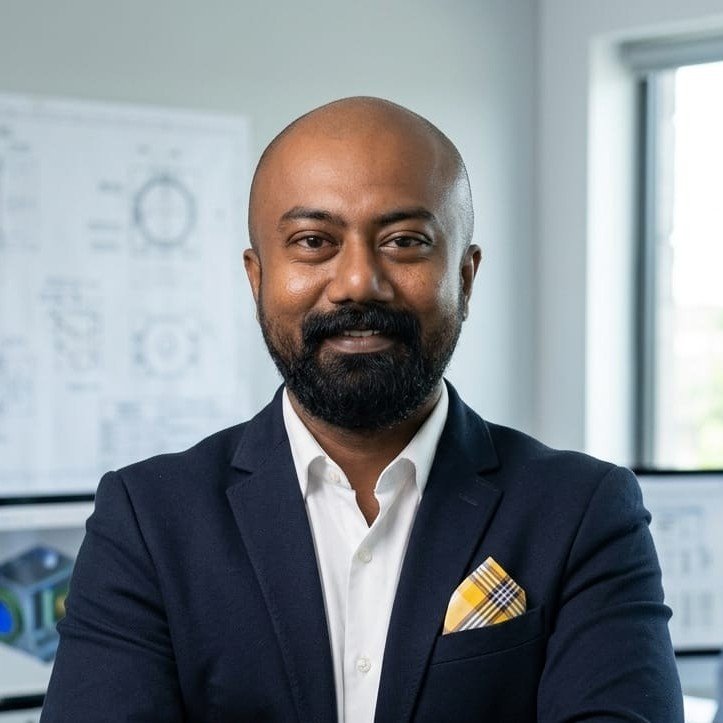
Karthikayan B is a seasoned professional with over 10 years of experience in CAD engineering, 3D modeling, visualization, corporate training, and project management. Starting his career in 2011 as a CAD Draftsman, he has progressed through various roles involving site design, 3D visualization, and advanced training delivery.
As a skilled communicator and corporate trainer, he excels in delivering training on IT-related products, Autodesk AEC/M&E solutions, and design software. He has successfully trained professionals at institutions and corporations across the globe, including Ghana, Oman, Sri Lanka, Malaysia, Bangladesh, and multiple cities in India.
His expertise in business profit maneuvering is reflected through revenue generation, operational management, and curriculum development in diverse international locations. Karthikayan has conducted numerous workshops and corporate training programs, helping professionals enhance their skills in advanced design and visualization tools.
Flexible and analytical with a keen eye for detail, he is passionate about 3D modeling, visualization, and training, with a strong appetite for adopting new technologies. His extensive international exposure and hands-on experience enable him to approach training with seriousness, diligence, and a clear focus on real-world industry applications.
| Day | Timing | Classes Type | Class Hour’s |
|---|---|---|---|
| Monday | 10:00 AM – 09:00 PM | Batches | 2 Hours Session |
| Wednesday | 12:00 PM – 09:00 PM | One to one | 2 Hours Session |
| Thursday | 10:00 AM – 09:00 PM | One to one | 2 Hours Session |
| Friday | 12:00 PM – 09:00 PM | Private | 2 Hours Session |
| Saturday | 10:00 AM – 09:00 PM | Batches | 2 Hours Session |
| Sunday | 10:00 AM – 09:00 PM | One to one | 2 Hours Session |
SAFE Structure is a dedicated finite element software developed by CSI (Computers and Structures Inc.) for the analysis and design of horizontal structural elements — including flat slabs, ribbed floors, post-tensioned plates, mat foundations, and raft foundations. In Dubai, CSI SAFE is the preferred tool among structural consultancies for slab and foundation design work on residential towers, commercial buildings, and podium slabs. Dubai Municipality requires structural calculations for slab systems and foundation designs to conform to recognised codes such as ACI 318 and BS 8110; SAFE Structure training at Orbit equips engineers to produce code-compliant, calculation-ready outputs that meet these submission requirements. SAFE is typically used alongside ETABS — ETABS handles the superstructure frame analysis, and SAFE handles the slab and foundation design below.
According to the Dubai Land Department, real estate transactions in Dubai reached a record AED 761 billion in 2024, sustaining a pipeline of high-rise residential and mixed-use towers that all require detailed slab and foundation design.
Every multi-storey building in Dubai — from a G+5 villa tower to a G+40 mixed-use development — needs a flat slab or mat foundation designed to ACI or BS code standards, and SAFE is the software used to produce those designs.
Structural consultancies in Business Bay, JLT, and Dubai Investment Park list SAFE proficiency alongside ETABS as a core requirement for structural design engineer roles.
Foundation Design Engineers and Slab Design Specialists in Dubai earn between AED 9,000 and AED 20,000 per month depending on project complexity and experience.
In this course, you will build a complete mat foundation model for a G+20 residential tower in Dubai — importing column loads from an ETABS model, defining soil subgrade reaction parameters, running settlement and bearing pressure analysis, and producing ACI 318-compliant reinforcement layouts for the raft.
You will also model a typical flat slab floor plate, run strip design and punching shear checks, calculate short-term and long-term deflections, and generate a design report formatted for Dubai Municipality submission.
The post-tensioning module covers tendon profile layout and balanced load design for PT slabs.
Sessions run 2 hours each across 30–40 hours total, structured to fit around active project schedules for working engineers.
This course is open to any civil or structural engineer — no prior SAFE software experience is required.
Practising structural engineers who currently use ETABS for frame analysis but hand-off slab and foundation design to senior colleagues will gain immediate value by learning to run SAFE independently.
Fresh civil engineering graduates can use SAFE certification to close a clear skill gap that Dubai structural employers consistently highlight in interview feedback.
Geotechnical engineers who produce soil reports and want to understand how subgrade reaction data feeds into foundation design will also find the mat modelling modules directly applicable.
The one condition for joining is a basic understanding of structural concepts — if you know what a slab load path is, you are ready to start.
| Job Title | AED Monthly Salary Range |
|---|---|
| Junior Structural Engineer (SAFE / Slab Design) | AED 6,500 – 9,500 |
| Structural Design Engineer (Slab + Foundation) | AED 9,000 – 15,000 |
| Foundation Design Specialist | AED 12,000 – 20,000 |
| Senior Structural Engineer (ETABS + SAFE) | AED 16,000 – 25,000 |
| Principal Structural Engineer / Team Lead | AED 24,000 – 38,000 |
| Freelance Structural Design Consultant | AED 15,000 – 45,000+ (project basis) |
Engineers who combine ETABS and SAFE proficiency are far more employable than those with only one tool, and Dubai consultancies regularly specify both in the same job listing. Dubai 2040 Urban Master Plan projects across all five urban centres, along with ongoing residential development by Emaar, Nakheel, Aldar, and Dubai South, ensure consistent demand for slab and foundation design specialists through the decade ahead.
Karthikayan Balamurugan, structural and CAD software trainer with 15 years of experience, has trained over 2,000 professionals at Orbit Training Centre across ETABS, AutoCAD, Revit, STAAD Pro, and structural design disciplines — including engineers from leading UAE consultancies handling high-rise residential and commercial projects.
The free demo session at Orbit works like this: you attend a live 1–2 hour session where Mukesh opens a SAFE model of a typical Dubai flat slab floor plate, explains the software environment, walks through a strip design calculation on screen, and then takes your questions about the course structure and your specific learning goals. There is no commitment required — the demo is designed so you can assess the training quality and pace before enrolling.
One-to-one training at Orbit means the 30–40 hour SAFE course focuses on the project types and code questions you are actually working with. If your current project involves a PT slab or a raft with variable soil conditions, sessions can spend more time on those modules. Batch students complete the course in six to eight weeks; one-to-one students typically finish in three to five weeks fitting around working hours.
Post-training support includes 30-day access to all course materials and working SAFE model files, direct access to Mukesh for model-checking queries on live project work, and guidance on certification documentation. Engineers often use this window to get a second opinion on a raft foundation model they are running on an active project.
All Orbit certifications are aligned with KHDA (Knowledge and Human Development Authority) standards and are recognised by UAE structural engineering employers as validated proof of software competence.
SAFE (Slab Analysis by the Finite Element Method) is a structural analysis and design software from Computers and Structures, Inc. (CSI), purpose-built for the design of horizontal building elements — flat slabs, ribbed and waffle slabs, post-tensioned floor systems, and mat or raft foundations. Where a building-frame tool like ETABS handles the full vertical structural system — columns, beams, shear walls, and lateral load resistance — SAFE is deliberately narrower in scope, focused entirely on how loads move through slabs and foundations into the ground beneath a building. It uses finite element analysis to model a slab or foundation as a mesh of connected elements, letting engineers see exactly how bending moments, shear forces, and deflections distribute across an irregular floor plate or a mat foundation with variable soil conditions — something far harder to capture accurately with hand calculations or simplified strip methods. SAFE supports ACI 318, BS 8110, and other major international codes, and its close integration with ETABS — allowing direct import of column and wall reactions from a building model — is a defining part of how the two tools are used together on real projects.
In practice, SAFE is used at the detailed design stage for the horizontal elements of a building, after the overall structural frame has been analysed in a tool like ETABS. Structural engineers use it to design flat slab and ribbed slab floor systems, running strip design and punching shear checks around columns to determine reinforcement layouts; to design mat and raft foundations, incorporating soil subgrade reaction data from a geotechnical report to check settlement and bearing pressure; and to design post-tensioned slabs, calculating tendon profiles and balanced loads for longer-span commercial floor plates. The output — reinforcement drawings, deflection calculations, and design reports — feeds directly into the structural drawing set submitted to Dubai Municipality for building permit approval. Because nearly every multi-storey building in Dubai, from a G+5 residential block to a G+40 mixed-use tower, needs either a flat slab or mat foundation designed to code, SAFE sits alongside ETABS as one of the two software packages a Dubai structural consultancy expects a design engineer to know.
The course opens with mat foundation design for a complete G+20 residential tower — importing column loads from an ETABS model, defining soil subgrade reaction parameters from a geotechnical report, and running settlement and bearing pressure analysis before producing ACI 318-compliant reinforcement layouts for the raft. From there, you move into flat slab design, modelling a typical floor plate, running strip design and punching shear checks around columns, and calculating both short-term and long-term deflections — a common source of design queries on real Dubai projects where floor-to-floor heights are tight. The post-tensioning module covers tendon profile layout and balanced load design for PT slabs, a specialised skill increasingly requested on longer-span commercial projects. Throughout the course, you also learn to generate design reports formatted for Dubai Municipality submission, since producing a clean, reviewable calculation package is as much a practical requirement as running the analysis correctly. One module specifically covers ETABS-to-SAFE load import, so even if you have not taken Orbit’s ETABS course, you understand exactly how the two tools connect on a real project workflow.
Every multi-storey building constructed in Dubai needs a slab and foundation system designed to code before Dubai Municipality will approve construction, which means SAFE — or an equivalent finite element slab and foundation tool — sits on the critical path of nearly every development in the city. With real estate transactions reaching a record AED 761 billion in 2024 according to Dubai Land Department data, the volume of towers requiring detailed slab and foundation design at any given time is substantial, and structural consultancies in Business Bay, JLT, and Dubai Investment Park consistently list SAFE proficiency alongside ETABS as a core requirement in structural design engineer job postings. Ground conditions across Dubai vary considerably — from reclaimed coastal land requiring careful settlement analysis to more stable inland sites — which means foundation design is rarely a copy-paste exercise from one project to the next, and engineers who can independently run soil-specific mat foundation analysis are more valuable than those who rely on standard, unverified assumptions. As the Dubai 2040 Urban Master Plan continues to drive development across the emirate’s five designated urban centres, and developers including Emaar, Nakheel, and Aldar maintain active residential pipelines, demand for slab and foundation design specialists is expected to remain consistent through the decade. There is also a quieter but important reason SAFE skills matter in Dubai’s market specifically: foundation failures or under-designed slabs are far more expensive and disruptive to correct after construction has started than an error caught at design stage, which means consultancies place a real premium on engineers who can independently verify their own SAFE output against hand-calculation sanity checks rather than trusting software results blindly. That verification habit — comparing a punching shear result or a settlement estimate against a rough manual check before it goes into a submission package — is exactly the kind of professional judgment that separates an engineer clients trust with unsupervised design work from one who still needs every model double-checked by a senior colleague.
Junior Structural Engineers working across SAFE and general slab design typically start at AED 6,500–9,500 per month, and those who add ETABS proficiency alongside SAFE tend to progress faster than single-tool specialists, since most consultancies want engineers who can run both sides of the building-to-foundation workflow. With independent design responsibility for slab and foundation packages, engineers move into Structural Design Engineer roles at AED 9,000–15,000 per month, and from there into dedicated Foundation Design Specialist positions earning AED 12,000–20,000 per month — a role focused specifically on mat and raft design, often for engineers who have developed a strong grasp of geotechnical interaction. Senior Structural Engineers who combine ETABS and SAFE expertise earn AED 16,000–25,000 per month, typically taking ownership of both the building frame and the foundation package on individual projects. At the top end, Principal Structural Engineers and Team Leads managing full project teams earn AED 24,000–38,000 per month. Freelance structural design consultants handling Dubai foundation and slab design work on a project-fee basis can earn AED 15,000–45,000 or more per month depending on project volume and complexity, particularly those with post-tensioning design experience, which remains a comparatively scarce specialisation in the local market. Engineers who reach senior or principal level with strong SAFE expertise also frequently move into peer-review or third-party checking roles, where consultancies or developers pay for an independent verification of another firm’s foundation design before construction begins — a niche but well-compensated path for engineers with a strong reputation for careful, detail-oriented design work.
Orbit’s SAFE Structure course is taught by Karthikayan Balamurugan, a structural and CAD software trainer with 15 years of experience who has trained over 2,000 professionals across ETABS, AutoCAD, Revit, STAAD Pro, and structural design disciplines, including engineers from leading UAE consultancies handling high-rise residential and commercial projects. The course is built around real Dubai project scenarios — a G+20 mat foundation, a typical flat slab floor plate, and a post-tensioned slab module — rather than generic textbook examples, so the design decisions you practice in class reflect the soil conditions, code requirements, and floor-to-floor constraints you will actually encounter on a Dubai job. Training runs in small batches or fully one-to-one, letting the course focus on the project types and code questions most relevant to you — if your current work involves a raft foundation with variable soil conditions, sessions can spend more time there rather than moving at a fixed group pace. Every completed course earns a KHDA-aligned certificate recognised by structural consultancies and contractors across Dubai, Abu Dhabi, and the wider UAE. Post-training support includes 30-day access to course materials and working SAFE model files, plus direct access to the trainer for model-checking queries on live project work — support that engineers frequently use to get a second opinion on a raft foundation model they are running on an active project.
Whether you are a structural engineer who currently hands off slab and foundation design to a senior colleague and want to run SAFE independently, a fresh civil engineering graduate closing a skill gap that Dubai employers consistently flag in interview feedback, or a geotechnical engineer who wants to understand how soil report data actually feeds into a foundation model, Orbit’s SAFE course is structured to meet you at your starting point. A free demo session is available before you commit — a live 1–2 hour session where the trainer opens a SAFE model of a typical Dubai flat slab floor plate, walks through a strip design calculation on screen, and takes your specific questions about the course and your learning goals, with no commitment required. One-to-one sessions are available for anyone who wants to compress the course timeline or focus specifically on a project type — a PT slab, a raft on variable soil, or a straightforward flat slab package — rather than working through the full syllabus at a fixed group pace. Book your free demo at Orbit Training Centre Dubai and see the software and the teaching approach for yourself before enrolling.
CSI SAFE is a finite element analysis and design software used by structural engineers in Dubai to design horizontal building elements — flat slabs, ribbed slabs, post-tensioned floors, mat foundations, and raft foundations. Dubai structural consultancies use SAFE to produce slab reinforcement layouts and foundation design calculations that comply with ACI 318, BS 8110, and UAE SBC code requirements submitted to Dubai Municipality for building permits.
ETABS is used for the analysis and design of the full building frame — columns, beams, shear walls, and the overall structural system under gravity and lateral loads. SAFE focuses specifically on horizontal elements: slabs and foundations. In a typical Dubai project workflow, column reactions are exported from the ETABS model and imported into SAFE, where the mat foundation or flat slab is designed in detail. Most Dubai consultancies require proficiency in both tools.
No. The SAFE Structure course at Orbit Training Centre is fully standalone. You will learn to input column loads and support conditions directly without needing an existing ETABS model. That said, the course includes one module on ETABS-to-SAFE load import for students who already use ETABS, making the integration workflow clear. Prior knowledge of basic structural engineering concepts — loads, reactions, and code requirements — is sufficient to start.
Yes. Orbit Training Centre’s certification is aligned with KHDA (Knowledge and Human Development Authority) standards — the body that governs private training quality in Dubai. Structural consultancies and contractors in Dubai, Abu Dhabi, and the wider UAE recognise KHDA-aligned training certificates as verified proof of software competence when reviewing engineering CVs and shortlisting candidates for design roles.
Foundation Design Specialists and Slab Design Engineers in Dubai who use SAFE earn AED 12,000–20,000 per month at mid-level, and AED 24,000–38,000 at principal or team lead level. Junior structural engineers who can use both ETABS and SAFE start at AED 6,500–9,500 per month and progress faster than those with only one tool. Freelance structural consultants handling Dubai foundation design projects typically earn significantly more on a project-fee basis.
SAFE is generally considered more approachable than a full building analysis package like ETABS, mainly because it is focused on a narrower problem — slabs and foundations — rather than the full complexity of a building’s lateral and gravity system together. If you understand basic structural concepts such as load paths, bearing pressure, and reinforcement design, the software workflow itself — defining a slab or mat, applying column loads, running the analysis, and reading strip design results — is learnable within the first few sessions. Where beginners tend to slow down is interpreting results correctly: understanding why a punching shear check is failing around a column, or how to read a deflection contour and judge whether it is actually a problem or within acceptable limits, takes hands-on repetition rather than just watching a demonstration. That is why Orbit’s course is built around a complete G+20 mat foundation model and a separate flat slab exercise rather than isolated tool tutorials — you build the judgment alongside the software mechanics on the same kind of project you would be assigned at a Dubai structural consultancy. Engineers with some prior exposure to load paths and reinforced concrete design typically run independent SAFE models confidently by the later sessions of the course.
Structural consultancies remain the largest employer of SAFE skills, since every multi-storey building submitted for a Dubai Municipality permit needs a designed and calculated slab and foundation system, and SAFE is the dominant software used to produce that design package. Geotechnical and foundation specialist firms also value SAFE proficiency, particularly for engineers who can take a soil investigation report and translate its subgrade reaction or bearing capacity data directly into a working mat foundation model rather than passing that step to someone else. Main contractors on large developments increasingly keep in-house structural engineers with SAFE skills to review foundation designs and manage variations during construction, especially on projects where ground conditions differ from what was assumed at design stage. Post-tensioning specialist subcontractors — companies that supply and install PT slab systems — also hire SAFE-proficient engineers for tendon layout design and balanced load calculations, a more specialised niche within the broader slab and foundation design field.
Yes — the SAFE Structure course is available both as in-person training at Orbit’s Dubai campus and as a live online course, using the same 30–40 hour curriculum covering mat foundation design, flat slab design, and post-tensioning. Online sessions run in small batches or one-to-one, with the trainer sharing their screen through the mat foundation and strip design exercises step by step and reviewing your own model in real time rather than leaving you with a recorded video to follow alone. This format works well for structural engineers based outside Dubai or working professionals who need to fit training around active project deadlines without a daily commute to campus. Online students receive the identical KHDA-aligned certificate on completion, and the same 30-day post-training mentor support applies regardless of which format you choose.
ETABS is the closest and most necessary pairing, since SAFE is designed to take column and wall reactions exported directly from an ETABS building model — engineers who know only SAFE without ETABS are limited to projects where someone else has already produced that load data, while engineers who know both can run a complete building-to-foundation workflow independently; Orbit’s ETABS course covers the building frame side of that pairing. For engineers who also handle non-building structures — industrial platforms, bridges, temporary works — STAAD Pro broadens the range of project types you can take on beyond standard tower foundation design. And on BIM-mandated Dubai projects, pairing SAFE with Revit Structure is increasingly valuable, since foundation and slab designs are expected to coordinate with a shared structural BIM model rather than exist as a standalone calculation file disconnected from the rest of the project team’s work.
Post-tensioned (PT) slab design in SAFE involves an additional layer of complexity beyond standard reinforced concrete slab design: tendon profile layout, where you define how the PT cables drape vertically through the slab depth to counteract gravity load, and balanced load design, where the goal is to select a tendon force and profile that offsets a target percentage of the dead load rather than simply adding reinforcement until a strength check passes. This matters in Dubai specifically because PT slabs are common on longer-span commercial floor plates and parking structures, where they allow thinner slabs and longer spans than conventional RC design — a real cost and headroom advantage on projects where floor-to-floor height is a commercial driver. Engineers working through Orbit’s post-tensioning module learn to set up tendon geometry, calculate balanced loads, and check both short-term and long-term deflection and stress limits specific to PT design, which is a distinctly specialised skill set that not every SAFE-proficient engineer has — making it a genuine differentiator for anyone targeting commercial or high-span structural design roles in Dubai.