Our React.js Course combines hands-on projects with expert instruction, helping you build real, job-ready skills in Dubai.
Join our React.js Development Training Course in Dubai, available both in-person and online. Learn to build dynamic, component-based web interfaces using React.js and modern JavaScript tools. Suitable for front-end developers, full stack developer aspirants, JavaScript programmers, and fresh graduates entering web development.







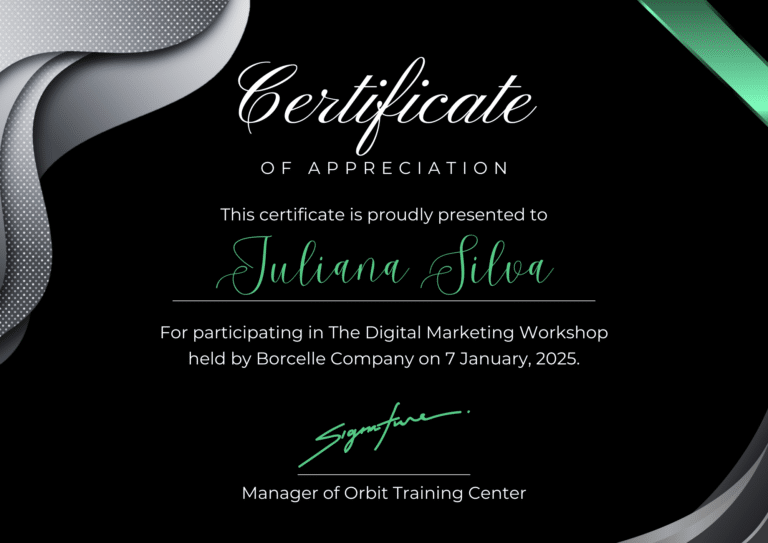
React.js development training at Orbit Training Centre equips you with the practical skills to design and build production-ready web applications using React.js, one of the most widely deployed JavaScript libraries in the UAE tech market. Led by Juraij V U, with 6 years of training experience and over 500 professionals trained, the course covers component architecture, state management, hooks, routing, and API integration. You receive an internationally recognised, KHDA-aligned certificate upon completion.
React.js development training at Orbit Training Centre equips you with the practical skills to design and build production-ready web applications using React.js, one of the most widely deployed JavaScript libraries in the UAE tech market. Led by Juraij V U, with 6 years of training experience and over 500 professionals trained, the course covers component architecture, state management, hooks, routing, and API integration. You receive an internationally recognised, KHDA-aligned certificate upon completion.
Training is delivered in small batches and one-to-one formats across 30–40 hours of instructor-led sessions. You practice building a multi-page React application connecting to a live API — the type of project requested in actual Dubai hiring exercises. UAE-based employers across fintech, e-commerce, and government digital portals recognise this certification. Completing this course qualifies you for roles including React Developer, Front-End Developer, and Junior Full Stack Developer in Dubai.

I am an experienced Computer Coding Educator, committed to teaching the newest programming languages and frameworks from the most recent. I am well versed and expertise in programming languages such as Python, PHP, Laravel, HTML, CSS, and JavaScript both so far as front end and backend technologies are concerned. I have learned these languages deepl, and their practical applications, thus have formulated, and delivers training programs which are tailored to meet specific requirements of individuals and organizations.
My teaching approach is highly interactive, keeping students in a participative mood through exercises, lectures, and real-world applications that help them to understand the concept essentially. I am proud for my skill to explain tricky ideas instead of unsettling them as well as devotion to build a trustful environment. This way, students would not only acquire the skills essential to modern industries, but also build the communication skills useful for a productive and fulfilling career life. Students from a previous class speaks highly of my skills in breaking down difficult concept into easy to understand parts which makes me a sought-after trainer of developers’ community.
| Day | Timing | Classes Type | Class Hour’s |
|---|---|---|---|
| Monday | 10:00 AM – 09:00 PM | Batches | 2 Hours Session |
| Wednesday | 12:00 PM – 09:00 PM | One to one | 2 Hours Session |
| Thursday | 10:00 AM – 09:00 PM | One to one | 2 Hours Session |
| Friday | 12:00 PM – 09:00 PM | Private | 2 Hours Session |
| Saturday | 10:00 AM – 09:00 PM | Batches | 2 Hours Session |
| Sunday | 10:00 AM – 09:00 PM | One to one | 2 Hours Session |
React.js is a JavaScript library developed by Meta for building fast, interactive user interfaces through a component-based architecture. In Dubai, React.js is the front-end technology of choice across fintech platforms, government digital portals, e-commerce applications, and enterprise SaaS products. Companies including Careem, Noon, Talabat, and Dubai government service providers use React.js in live production systems. React.js development training in Dubai at Orbit Training Centre prepares you to join these teams — writing clean, deployable code from the first week of the course.
Dubai’s technology sector is growing fast. According to the Dubai Chamber of Digital Economy (2025), the emirate supported 1,210 new digital startups in 2024 — a 120% increase from the prior year.
The UAE IT services market reached USD 5,880 million in 2024 and is projected to grow at 9.1% annually through 2033 (IMARC Group, 2024). This expansion drives direct demand for front-end developers who can build modern, performant web applications.
React.js is the dominant tool for this work. Employers at DIFC-based fintechs, Dubai Internet City product companies, and e-commerce platforms actively list React.js as a required skill in job postings.
Entry-level React developer roles in Dubai start at AED 5,000–8,000 per month for recent graduates. With two to three years of project experience, this rises to AED 10,000–18,000 per month for mid-level roles.
This react developer course teaches you to build, test, and deploy React applications from scratch. You learn to architect a component tree for a multi-page e-commerce interface — the same structure used in Dubai-based online retail platforms.
You implement API calls to a live product database using Axios, manage cart state with Redux Toolkit, and apply client-side routing with React Router. You practice test-writing in Jest so your code meets the quality standards required in professional UAE development teams.
Sessions run for 2 hours each over a total of 30–40 hours. By the final session, you submit a complete single-page application connecting a React front end to a live external API — a portfolio piece directly usable in job applications across Dubai’s tech market.
This course is open to anyone — no prior experience with React is required, though basic HTML, CSS, and JavaScript knowledge will help you progress faster.
If you have never written JavaScript before, Orbit offers a foundational JavaScript module you can complete first.
The react developer training is suitable for front-end web developers who already know HTML and CSS and want to move into component-based development. It also fits full-stack developers who handle back-end work and want to strengthen their client-side output.
Fresh IT graduates entering the Dubai job market, career changers from non-technical roles who have completed self-study, and working developers who need to upskill for a new project — all of these profiles complete this course and go on to apply it in paid work within months of finishing.
| Job Title | Skill Focus | AED Monthly Salary |
|---|---|---|
| Junior React Developer | Components, Hooks, REST APIs | AED 5,000–8,000 |
| React Front-End Developer | UI architecture, Redux, routing | AED 8,000–13,000 |
| Senior React Developer | Performance, testing, code review | AED 13,000–18,000 |
| Full Stack React Developer | React + Node.js / Django | AED 12,000–20,000 |
| Freelance React Developer | Project-based client work | AED 4,000–12,000/project |
Dubai’s hiring companies for React developers include product-based firms in Dubai Internet City, fintech startups in DIFC, e-commerce companies such as Noon and regional logistics platforms, and government digital transformation agencies.
Within two to three years of your first React role, you can move into senior developer or tech lead positions, particularly as UAE companies expand digital products under Dubai’s D33 Economic Agenda, which targets AED 100 billion per year in digital transformation value.
Juraij V U, web and software trainer with 6 years of experience, has trained over 500 professionals at Orbit Training Centre across JavaScript, React, and full-stack development disciplines.
The free demo session at Orbit includes a live React component walkthrough, a Q&A with the trainer on your current skill level and goals, and a short coding exercise building your first JSX element — so you can judge the pace and depth of instruction before enrolling.
One-to-one training at Orbit lets you move through the react full stack developer course at your own pace. Rather than waiting for a group to catch up, you spend session time on the modules that matter most to your specific project goals. This typically reduces the time to job-ready proficiency by three to four weeks compared to batch formats.
Post-training support at Orbit includes 30-day access to course materials, direct trainer queries by message for a month after your final session, and guidance on certification exam applications and portfolio project review.
Orbit’s curriculum is KHDA-aligned, meaning your certificate carries the Knowledge and Human Development Authority mark that UAE employers use to verify training quality. This is relevant when applying for tech roles at Dubai government entities, free zone companies requiring verified credentials, or multinational firms with UAE HR compliance requirements.
React.js is a JavaScript library, created and maintained by Meta, for building user interfaces through reusable, composable components. Instead of building a page as one large block of HTML and JavaScript, React lets you break an interface into small, self-contained pieces — a button, a product card, a navigation bar — each managing its own logic and rendering, which you then combine to build complete pages. React’s defining characteristic is its declarative approach: rather than writing step-by-step instructions for how the browser should update the DOM when data changes, you describe what the UI should look like for any given state, and React’s virtual DOM — an in-memory representation of the actual page — calculates the most efficient way to update the real DOM to match. This makes applications both easier to reason about and faster to update, since React only changes the specific DOM elements that actually need to change rather than re-rendering entire sections of a page. Modern React development centers on hooks — functions like useState and useEffect that let components manage their own data and respond to changes — which replaced older, more verbose class-based patterns and made React components significantly easier to write and read. React itself is unopinionated about many architectural decisions — routing, state management, and data fetching are all handled by separate libraries you choose and combine, rather than being built into React itself the way they would be in a more prescriptive framework — which is part of why learning React well means learning a small ecosystem of surrounding tools, not just the library alone.
React is used to build the interactive, dynamic frontend of web applications — anything where the interface needs to update in response to user actions or new data without a full page reload. E-commerce platforms use React to build product browsing, filtering, and checkout flows that feel instant to the user. Fintech applications use React for dashboards and transaction interfaces that need to display real-time or frequently updating data cleanly. Social platforms, content management interfaces, and admin dashboards all rely on React’s component model to manage complex, stateful interfaces without the code becoming unmanageable as features are added. Beyond standard web apps, React Native — a related but distinct framework — extends the same component concepts to native mobile app development, which is part of why React skills transfer unusually well across web and mobile development tracks. In Dubai specifically, React has become the default choice for any company building a modern, interactive product interface, from DIFC fintech startups to large e-commerce platforms, largely because of how well it scales from a simple landing page to a large, feature-rich application without requiring a full architectural rewrite somewhere along the way as the product grows.
The course teaches you to build, test, and deploy React applications from the ground up, structured around architecting a component tree for a multi-page e-commerce interface — the same structural pattern used in Dubai-based online retail platforms. You implement live API calls to a product database using Axios, learning how React applications fetch and display real external data rather than static placeholder content. State management is covered through Redux Toolkit, giving you the tools to manage cart state and other data that needs to be shared and stay consistent across multiple components — a common source of confusion for developers new to React, and a skill Dubai employers specifically test for in technical interviews. Client-side routing is covered with React Router, enabling the multi-page navigation feel modern single-page applications require. You also practice test-writing in Jest, meeting the code quality standards expected on professional UAE development teams rather than treating testing as optional. Sessions run for 2 hours each over a total of 30–40 hours, and by the final session, you submit a complete single-page application connecting a React front end to a live external API — a portfolio piece directly usable in job applications across Dubai’s tech market, not a toy exercise you would need to rebuild later before showing it to a prospective employer.
Dubai’s technology sector is growing fast: the Dubai Chamber of Digital Economy (2025) reports the emirate supported 1,210 new digital startups in 2024, a 120% increase from the prior year, and the UAE IT services market reached USD 5,880 million in 2024, projected to grow at 9.1% annually through 2033 (IMARC Group, 2024). React sits at the center of this growth because it’s the dominant tool employers reach for when building the kind of fast, interactive product interfaces that modern digital businesses need to compete — a slow or clunky interface is a genuine competitive disadvantage in Dubai’s crowded e-commerce and fintech markets, where customers switch to a competing platform within moments of a frustrating experience. Employers at DIFC-based fintechs, Dubai Internet City product companies, and e-commerce platforms actively list React.js as a required skill in job postings, and Dubai’s D33 Economic Agenda, which targets AED 100 billion per year in digital transformation value, is expected to keep sustaining demand for React-capable frontend developers as more government and private-sector services move to digital-first, interactive platforms rather than static informational sites.
Entry-level React developer roles in Dubai start at AED 5,000–8,000 per month for recent graduates working on components, hooks, and REST API integration under supervision. With experience, developers move into React Front-End Developer roles handling UI architecture, Redux, and routing at AED 8,000–13,000, and with further specialization into performance optimization, testing, and code review responsibilities, into Senior React Developer positions at AED 13,000–18,000. A particularly strong career path in Dubai combines React with backend skills: Full Stack React Developers who pair React with Node.js or Django earn AED 12,000–20,000, reflecting the premium employers place on developers who can work across the full application rather than only the frontend. Freelance React development is also a genuine income path, with project-based work typically paying AED 4,000–12,000 per project depending on scope. Within two to three years of your first React role, moving into senior developer or tech lead positions is a realistic progression, particularly as UAE companies continue expanding digital products under Dubai’s D33 Economic Agenda. Dubai’s hiring companies for React developers include product-based firms in Dubai Internet City, fintech startups in DIFC, e-commerce companies such as Noon and regional logistics platforms, and government digital transformation agencies — giving certified React developers a genuinely broad spread of employer types rather than dependence on a single industry’s hiring cycle.
Orbit’s React.js course is taught by Juraij V U, a web and software trainer with 6 years of experience who has trained over 500 professionals at Orbit Training Centre across JavaScript, React, and full-stack development disciplines. The free demo session includes a live React component walkthrough, a Q&A with the trainer on your current skill level and goals, and a short coding exercise building your first JSX element — giving you a genuine sense of the teaching pace and depth before you commit to enrolling. One-to-one training lets you move through the curriculum at your own pace rather than waiting for a group to catch up, typically reducing the time to job-ready proficiency by three to four weeks compared to batch formats, since session time is spent entirely on the modules that matter most to your specific project goals. Every completed course carries a KHDA-aligned certificate, carrying the Knowledge and Human Development Authority mark that UAE employers use to verify training quality — relevant when applying for tech roles at Dubai government entities, free zone companies with credential verification requirements, or multinational firms with UAE HR compliance standards. Post-training support includes 30 days of course material access, direct trainer queries by message, and guidance on certification exam applications and portfolio project review. Class sizes stay deliberately small — five to eight students in batch format, or fully one-to-one — so component-level code review happens for every student in every session rather than a handful of questions fielded from a large group with limited individual attention.
Whether you already know HTML, CSS, and JavaScript and want to move into component-based development, you’re a full-stack developer strengthening your client-side output, or you’re a fresh IT graduate or career changer who has completed foundational JavaScript self-study, the course is structured to build on whatever level you’re starting from. If you’ve never written JavaScript before, Orbit’s foundational JavaScript module is available as a starting point the trainer can recommend during your free demo session. That demo includes a live React component walkthrough and a short hands-on coding exercise, giving you a clear, no-obligation sense of the course before enrolling. Most students who attend the demo go on to confirm their preferred schedule — batch, one-to-one, or online — within days. Weekday, weekend, and evening slots are available on a rolling basis, so fitting the course around an existing job or study schedule is rarely a practical obstacle to getting started.
React.js is a JavaScript library used to build user interfaces for web applications. In Dubai, it is the standard front-end tool for fintech platforms, e-commerce sites, government digital portals, and enterprise SaaS products. Companies operating from Dubai Internet City, DIFC, and JAFZA use React.js in production. It is the most in-demand front-end JavaScript skill listed in Dubai developer job postings as of 2025.
The React.js course at Orbit Training Centre runs across 30–40 hours of instruction, delivered in 2-hour sessions. In a standard batch format, this covers roughly 4–6 weeks depending on session frequency. One-to-one students often complete the same content in 3–4 weeks because every session is focused on their pace and project goals, with no time spent on group catch-up.
No prior React experience is required. A basic understanding of HTML, CSS, and JavaScript is helpful and will let you progress faster. If you do not have JavaScript knowledge yet, Orbit recommends completing a foundational JavaScript module first. Complete beginners who have done self-study on HTML and CSS can join and will receive additional trainer support during the first three sessions to bring their skills up to speed.
Orbit’s certification is KHDA-aligned, meaning it carries the Knowledge and Human Development Authority mark that Dubai employers use to verify the legitimacy of private training. This is recognised by UAE private sector companies, free zone employers, and government digital agencies. For roles in DIFC, JAFZA, or Dubai Internet City, a KHDA-aligned certificate meets the credential verification requirement most HR departments apply.
Orbit’s certification is KHDA-aligned, meaning it carries the Knowledge and Human Development Authority mark that Dubai employers use to verify the legitimacy of private training. This is recognised by UAE private sector companies, free zone employers, and government digital agencies. For roles in DIFC, JAFZA, or Dubai Internet City, a KHDA-aligned certificate meets the credential verification requirement most HR departments apply.
Knowing vanilla JavaScript well is genuinely the best preparation for React, since React is a JavaScript library, not a different language — its component syntax (JSX) and hooks (useState, useEffect) are patterns built on top of JavaScript concepts you already use, not a replacement for them. What trips up JavaScript developers moving into React is less the syntax and more the shift in thinking: vanilla JavaScript typically manipulates the DOM directly and imperatively, telling the browser exactly what to change step by step, while React works declaratively — you describe what the interface should look like for a given state, and React figures out the DOM updates itself through its virtual DOM diffing process. Orbit’s course addresses this shift directly by building a real multi-page e-commerce interface from the first sessions, so the declarative pattern is learned through practice rather than abstract explanation. Developers with solid JavaScript fundamentals — functions, array methods, asynchronous code — typically reach a comfortable working pace with React components within the first week of the course, and move into hooks, state management, and routing well before the midpoint.
React has a larger job market footprint in Dubai currently, with more listings at DIFC-based fintechs, Dubai Internet City product companies, and e-commerce platforms explicitly requiring it — which makes it the safer first choice if you’re optimizing purely for job volume. Vue.js is generally considered to have a gentler learning curve and is popular among smaller teams and agencies for its simpler setup and more approachable syntax, but the Dubai hiring market for Vue-only roles is smaller than for React. In practice, the two share enough conceptual ground — component-based architecture, reactive state, a virtual DOM — that learning React first and picking up Vue.js later (or vice versa) is a realistic path once you understand component-based frontend development generally. For most students building a first professional frontend skill in Dubai, React remains the higher-leverage starting point given how frequently it appears in local job postings compared to alternatives.
Beyond the well-known fintech and e-commerce employers, media and content platforms in Dubai use React to build fast, interactive news and streaming interfaces where page performance directly affects audience retention. Government digital transformation initiatives under Dubai’s smart city programs increasingly use React for citizen-facing service portals, valuing its component reusability across multiple government digital properties. Real estate technology platforms — property listing and search tools — rely heavily on React for the fast, filter-heavy interfaces users expect when browsing large property inventories. Travel and hospitality booking platforms, a significant part of Dubai’s digital economy given the emirate’s tourism volume, also build their booking flows in React for the same reason: complex, stateful, highly interactive interfaces that a component-based framework handles far more maintainably than plain JavaScript at scale.
Yes — the React.js course runs both in-person at Orbit’s Dubai campus and as live online training, covering the same 30–40 hour curriculum and the same e-commerce single-page application project either way. Online sessions use screen-sharing, so the trainer reviews your component structure and state management decisions in real time, catching architectural mistakes — like prop-drilling too many levels deep, or mismanaging state that should be lifted to a parent component — before they become habits that are harder to unlearn on larger projects. Online batches run in small groups or one-to-one, and online students receive the same KHDA-aligned certificate as in-person students on completion, making this a practical option for developers based outside Dubai who need UAE-calibrated React training.
For developers aiming at full stack roles, pairing React with Node.js is the most in-demand combination in Dubai’s job market, since a React frontend backed by a Node.js and Express API is one of the most widely hired-for architectures for product companies and startups alike — a pairing formalized in the MERN stack course, which covers exactly this combination alongside MongoDB. Developers who haven’t yet built a strong JavaScript foundation benefit from a dedicated JavaScript course before or alongside React, since gaps in core language understanding tend to surface as confusing React-specific bugs rather than obviously being JavaScript issues. TypeScript is also an increasingly valuable pairing for React developers targeting larger Dubai employers, since type safety on bigger codebases is now a common requirement in senior and enterprise-level frontend job postings.