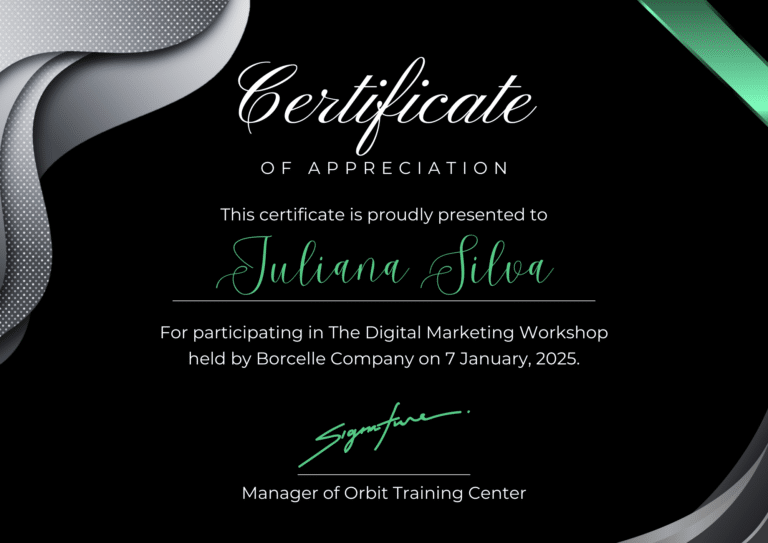
Our Microsoft Office Course combines hands-on projects with expert instruction, helping you build real, job-ready skills in Dubai.
Join our Microsoft Office course in Dubai, available in-person and online live. Master Excel, Word, PowerPoint, and Outlook through practical exercises on real office tasks — from building financial spreadsheets to designing professional presentations. This course suits job seekers, office professionals, administrators, and career switchers entering Dubai’s corporate job market







Microsoft Office training at Orbit Training Centre covers the full suite of MS Office applications — Excel, Word, PowerPoint, and Outlook — from basic navigation through to advanced functions, data analysis, professional document design, and inbox management. Led by Juraij V U, with 6 years of training experience and over 500 professionals trained, this course delivers an international-level Microsoft training certificate recognized by Dubai employers across every sector.
Microsoft Office training at Orbit Training Centre covers the full suite of MS Office applications — Excel, Word, PowerPoint, and Outlook — from basic navigation through to advanced functions, data analysis, professional document design, and inbox management. Led by Juraij V U, with 6 years of training experience and over 500 professionals trained, this course delivers an international-level Microsoft training certificate recognized by Dubai employers across every sector.
Training runs in small batches or one-to-one sessions across 2-hour classes, with the total course running 30–40 hours. You will build an Excel dashboard using pivot tables and VLOOKUP, create a formatted Word report using styles and mail merge, and design a complete PowerPoint presentation with SmartArt and custom animations — all exercises directly applicable to UAE office roles. Orbit’s Microsoft Office certificate is KHDA-aligned, making it a recognized credential for administrative, accounts, HR, and operations roles across Dubai and the UAE.

I am an experienced Computer Coding Educator, committed to teaching the newest programming languages and frameworks from the most recent. I am well versed and expertise in programming languages such as Python, PHP, Laravel, HTML, CSS, and JavaScript both so far as front end and backend technologies are concerned. I have learned these languages deepl, and their practical applications, thus have formulated, and delivers training programs which are tailored to meet specific requirements of individuals and organizations.
My teaching approach is highly interactive, keeping students in a participative mood through exercises, lectures, and real-world applications that help them to understand the concept essentially. I am proud for my skill to explain tricky ideas instead of unsettling them as well as devotion to build a trustful environment. This way, students would not only acquire the skills essential to modern industries, but also build the communication skills useful for a productive and fulfilling career life. Students from a previous class speaks highly of my skills in breaking down difficult concept into easy to understand parts which makes me a sought-after trainer of developers’ community.
| Day | Timing | Classes Type | Class Hour’s |
|---|---|---|---|
| Monday | 10:00 AM – 09:00 PM | Batches | 2 Hours Session |
| Wednesday | 12:00 PM – 09:00 PM | One to one | 2 Hours Session |
| Thursday | 10:00 AM – 09:00 PM | One to one | 2 Hours Session |
| Friday | 12:00 PM – 09:00 PM | Private | 2 Hours Session |
| Saturday | 10:00 AM – 09:00 PM | Batches | 2 Hours Session |
| Sunday | 10:00 AM – 09:00 PM | One to one | 2 Hours Session |
Microsoft Office is the suite of productivity applications — Word, Excel, PowerPoint, and Outlook — used in virtually every office environment in Dubai and across the UAE. These four tools handle the majority of daily tasks in administration, finance, HR, operations, logistics, and customer service roles. According to Microsoft, Office is used by over 1.2 billion people worldwide, making MS Office skills the single most universally required computer competency in the global job market. In Dubai’s corporate environment, proficiency in Microsoft Excel and Word is listed as a requirement in the majority of administrative and office-based job postings on platforms such as Bayt and LinkedIn. Microsoft Office course training at Orbit covers every application from the ground up, building practical skills that apply directly to daily work in Dubai offices.
MS Office proficiency is the baseline requirement for employment across Dubai’s largest hiring sectors. According to job data from Bayt.com and Laimoon (2024), Microsoft Office — particularly Excel, Word, and Outlook — appears as a listed skill requirement in the majority of administrative, accounts, HR, operations, and customer service vacancies in the UAE.
Dubai’s workforce spans industries including trade and logistics, hospitality, retail, real estate, healthcare, and financial services — each of which relies on Excel for reporting, Word for documentation, and Outlook for professional communication.
Certified Microsoft Office professionals in Dubai earn structured salaries: administrative assistants with strong MS Office skills earn AED 3,500–6,000 per month, executive assistants with advanced Excel earn AED 8,000–15,000, and data analysts using advanced Excel and pivot tables earn AED 10,000–18,000 per month.
A Microsoft training certificate demonstrates competency to employers who screen for it by name in job requirements.
This course builds all four MS Office applications in sequence. You will learn to:
Sessions run 2 hours each across 30–40 total hours, with integration exercises connecting the applications together.
This course is open to anyone — no prior experience with Excel, Word, PowerPoint, or Outlook is required for the basic track.
It is ideal for fresh graduates and school leavers entering the UAE job market, administrative and secretarial professionals, HR coordinators, accounts assistants, operations staff, and career returners re-entering the workforce.
If you can use a computer and have basic English, you are ready to start. The course offers both basic and advanced tracks.
| Job Title | AED Monthly Salary |
|---|---|
| Office Assistant / Data Entry Clerk | AED 2,500 – 4,000 |
| Administrative Assistant | AED 3,500 – 6,000 |
| Secretary / Receptionist | AED 3,000 – 7,000 |
| HR Coordinator | AED 5,000 – 9,000 |
| Accounts Assistant (Excel proficiency) | AED 4,000 – 8,000 |
| Operations Coordinator | AED 5,000 – 10,000 |
| Executive Assistant (Advanced Excel) | AED 8,000 – 15,000 |
| Data Analyst (Advanced Excel + Pivot Tables) | AED 10,000 – 18,000 |
Employers hiring MS Office-proficient candidates include companies in trade and logistics (JAFZA, Jebel Ali), real estate (Emaar, Nakheel), hospitality (Jumeirah Group), healthcare, and financial services firms in DIFC.
Professionals who add advanced Excel and pivot table skills typically move from assistant-level to analyst or coordinator roles within 12–18 months.
Juraij V U, trainer with 6 years of experience, has trained over 500 professionals across technical and computer skills disciplines at Orbit Training Centre.
The course runs in small batches of 5–8 students or one-to-one, which means your Excel formula errors get corrected during the session.
The free demo session includes a live Excel walkthrough (building a simple formula and chart), a short exercise in Word formatting, and a direct Q&A with the trainer covering which application track is most relevant to your job goals.
Post-training support includes 30 days of continued access to course materials, direct trainer queries when you hit Excel functions in your actual job, and guidance on applying for Microsoft’s own certifications (MOS).
Microsoft Office is the suite of productivity applications — principally Excel, Word, PowerPoint, and Outlook — that forms the baseline software toolkit for office-based work across virtually every industry in Dubai. Excel is a spreadsheet application for data entry, calculation, and analysis, ranging from simple lists to complex formula-driven models, pivot table summaries, and dashboards. Word is a document creation and formatting tool used for everything from short memos to long formatted reports with tables of contents and mail-merged letters. PowerPoint builds visual presentations for internal reporting, sales pitches, and training materials. Outlook manages professional email, calendars, and meeting scheduling. What makes the suite valuable as a package rather than four separate skills is integration — a mail merge pulls Word letters directly from an Excel contact list, a PowerPoint chart updates from linked Excel data, and Outlook calendar invites coordinate directly with meeting notes drafted in Word — and Dubai employers consistently expect candidates to move fluidly between all four rather than knowing only one in isolation.
In practical daily use across Dubai offices, Excel handles financial reporting, inventory tracking, HR records, sales pipeline management, and any task requiring calculation or data organization — advanced users build pivot table dashboards and use VLOOKUP, IF, and SUMIF formulas to automate reporting that would otherwise take hours of manual work. Word produces the contracts, proposals, policy documents, and correspondence that keep a business running on paper and digitally, with mail merge specifically used for high-volume personalized communication like tenant renewal letters or client proposals. PowerPoint is the default tool for internal management reporting, client pitches, and training decks across nearly every sector, from real estate sales presentations to construction project status updates. Outlook is the professional communication backbone — managing shared calendars for teams, setting up recurring meetings, and organizing contact groups for department-wide communication. Together, these four applications account for the large majority of day-to-day desk work in Dubai’s administrative, HR, accounts, operations, and management functions.
The course builds all four applications in a structured sequence rather than treating them as disconnected modules. In Excel, you’ll progress from basic data entry through advanced formulas — VLOOKUP, IF, SUMIF, COUNTIF — into pivot tables, charts, dashboards, and conditional formatting, the skill set that turns raw data into a usable business report. In Word, you’ll learn heading styles and table-of-contents automation for long documents, mail merge using Excel data sources, and track changes for collaborative document editing. PowerPoint training covers master slide layouts for consistent branding, SmartArt for visual hierarchy, custom animations, and embedding live Excel charts that update automatically. Outlook modules cover email rules for inbox management, recurring meeting setup, shared calendars, and contact groups. Sessions run 2 hours each across 30–40 total hours, and the course deliberately includes integration exercises — building a report in Excel, embedding it in a PowerPoint deck, and mail-merging a related Word letter — so you finish understanding how the applications work together, not just how each one works in isolation.
MS Office proficiency functions as a genuine employment gatekeeper in Dubai — job data from Bayt.com and Laimoon consistently shows it listed as a requirement across the majority of administrative, accounts, HR, operations, and customer service vacancies in the UAE, which means candidates without demonstrable proficiency get filtered out before their other qualifications are even considered. Dubai’s economy spans trade and logistics through JAFZA and Jebel Ali, hospitality through groups like Jumeirah, real estate through developers like Emaar and Nakheel, and financial services concentrated in DIFC — and every one of these sectors runs its internal reporting, documentation, and communication through Office applications regardless of what industry-specific software also gets used. For employers, hiring someone who is already fluent in Excel formulas and pivot tables rather than needing to be trained on the job saves real onboarding time and cost, which is why structured, verifiable MS Office training gives candidates a measurable edge over those who list “MS Office” on a CV without backing it with demonstrated skill.
Entry-level roles like Office Assistant or Data Entry Clerk (AED 2,500–4,000) require basic Word and Excel competency and serve as a common starting point for fresh graduates and career returners entering the UAE job market. With demonstrated Excel and organizational skill, the natural progression is into Administrative Assistant, Secretary, or Receptionist roles (AED 3,000–7,000), and from there into HR Coordinator or Accounts Assistant positions (AED 4,000–9,000) where Excel proficiency becomes a core rather than supporting skill. Operations Coordinator roles (AED 5,000–10,000) similarly depend heavily on Excel for tracking and reporting across logistics or project functions. The clearest salary jump in this career track comes from advanced Excel specifically — Executive Assistants with strong advanced Excel skills earn AED 8,000–15,000, and professionals who move into Data Analyst roles using advanced Excel and pivot tables as their core function earn AED 10,000–18,000. Employers hiring across this ladder include companies in trade and logistics, real estate, hospitality, healthcare, and DIFC-based financial services, and professionals who add advanced Excel and pivot table skills typically move from assistant-level to analyst or coordinator roles within 12–18 months. What separates the faster movers from those who stay at assistant level for years is usually not tenure but demonstrated ownership of a specific reporting process — being the person in the office who built and maintains the monthly sales dashboard or the HR tracking sheet tends to get noticed and rewarded far faster than general administrative competence alone, which is why the course deliberately teaches dashboard-building and automated reporting rather than stopping at individual formula mechanics.
Orbit’s Microsoft Office course is taught by Juraij V U, a trainer with 6 years of experience who has trained over 500 professionals across technical and computer skills disciplines at Orbit Training Centre. Classes run in small batches of 5–8 students or one-to-one, which matters specifically for Excel, where formula errors and logic mistakes get corrected during the session itself rather than discovered later when a report doesn’t balance. The free demo session includes a live Excel walkthrough building a simple formula and chart, a short Word formatting exercise, and a direct Q&A with the trainer covering which application track — basic or advanced — is most relevant to your specific job goals. Post-training support includes 30 days of continued access to course materials, direct trainer queries for when you hit unfamiliar Excel functions in your actual job, and guidance on applying for Microsoft’s official MOS certification if your target role specifically requires it. The course is structured around both basic and advanced tracks, so whether you’re starting from zero or filling specific gaps in existing knowledge, the curriculum adapts to your actual starting point rather than assuming one fixed baseline for every student.
Self-taught Office users, and even people who have used the applications daily for years without formal training, tend to plateau at the same point: they know enough Excel to enter data and write a basic SUM formula, but freeze when a task calls for VLOOKUP, nested IF statements, or a pivot table, so they fall back on manual counting and copy-pasting that eats hours a proper formula would save in seconds. In Word, the common gap is formatting discipline — manually adjusting font sizes and spacing line by line instead of using heading styles and templates, which becomes a serious time cost on any document longer than a couple of pages and makes collaborative editing with track changes far messier than it needs to be. In PowerPoint, self-taught users often rebuild slides from scratch for every new presentation rather than using master layouts, and in Outlook, unmanaged inboxes and manually re-created recurring meetings are a near-universal habit that email rules and calendar tools solve directly. Orbit’s course targets these specific plateau points rather than starting from absolute basics for everyone, which is why even experienced Office users who join the advanced track consistently say they picked up daily time-saving habits they had never been shown despite years of regular use.
Whether you’re a fresh graduate entering the Dubai job market for the first time, an administrative professional whose Excel skills have plateaued at basic formulas, or a career returner who needs to refresh skills that have changed since you last worked in an office, the course is structured to meet you at your actual level. A free demo session is available before you commit — a live Excel walkthrough, a short Word exercise, and a direct conversation with the trainer about which track fits your goals. Given how consistently MS Office proficiency is screened for by name across Dubai’s administrative, HR, accounts, and operations job postings, booking that demo is a practical, low-commitment first step toward clearing that gatekeeping requirement with genuine confidence rather than a CV line you hope nobody tests during a working interview.
A Microsoft Office course teaches you to use the four core MS Office applications — Excel for spreadsheets and data analysis, Word for documents and reports, PowerPoint for presentations, and Outlook for email and calendar management. In a Dubai-focused course, exercises are built around real office tasks: creating a sales report in Excel, formatting a business letter in Word, designing a client presentation in PowerPoint, and organizing a professional inbox in Outlook.
Microsoft offers some free online learning through Microsoft Learn (learn.microsoft.com), which covers basic product familiarity. However, free online modules do not include trainer-led instruction, hands-on correction of your work, or a KHDA-recognized certificate that UAE employers accept. Structured MS Office classes in Dubai at KHDA-aligned training centres — like Orbit — range from AED 500 to AED 2,000 depending on the level and duration, and include certification, direct trainer feedback, and post-training support that free online resources cannot replicate.
The full Microsoft Office course at Orbit Training Centre runs 30–40 hours, delivered in 2-hour sessions. Most students complete the course over 5–7 weeks attending batch sessions on weekday evenings or weekends. One-to-one students who schedule sessions more intensively can finish in 3–4 weeks. If you only need Excel — the most requested standalone module — a focused Microsoft Excel training program takes 15–20 hours, or roughly 3–4 weeks in a regular batch.
Many employers in Dubai explicitly list “Microsoft Office proficiency” or “advanced Excel” as a requirement in job postings for administrative, HR, accounts, and operations roles. While a certificate is not legally mandatory, holding a KHDA-recognized Microsoft training certificate demonstrates a verified skill level to employers who cannot otherwise assess your ability during an interview. In a competitive market where dozens of candidates apply for the same admin or coordinator role, a certificate provides a concrete differentiator.
Administrative assistant roles in Dubai requiring Microsoft Office skills pay between AED 3,500 and AED 6,000 per month at entry to mid-level. Executive assistants with advanced Excel and PowerPoint skills earn AED 8,000–15,000 per month. Data analysts using advanced Excel functions such as pivot tables, VLOOKUP, and Power Query earn AED 10,000–18,000 per month. Across all MS Office-dependent roles, professionals with demonstrated advanced Excel proficiency consistently command the highest salaries within each job category.
Most people who describe themselves as “basic” Excel users already know more than they realize — navigating cells, entering simple formulas like SUM, and formatting a table are the same foundation advanced Excel builds on, so you’re not starting from zero. What actually feels difficult at first is logical thinking with functions like VLOOKUP, IF, and nested formulas, because you have to plan a formula’s logic before typing it rather than building it intuitively as you go — that’s a different mental habit, not a harder skill. Pivot tables trip up more people initially than formulas do, simply because the interface groups and summarizes data in a way that doesn’t map to anything in basic Excel use. Orbit’s course builds these skills on realistic business data — sales reports, expense tracking, HR records — rather than abstract practice sheets, so the logic clicks faster because you can see why a formula or pivot table matters for an actual reporting task. Most students with only basic Excel experience are comfortable building their own pivot table dashboards and VLOOKUP-based reports by the end of the course.
Two different things get called “Microsoft Office certification” and it’s worth knowing the difference. Microsoft Office Specialist (MOS) is Microsoft’s own official exam-based certification, taken through an authorized testing center, and it’s the credential some larger corporate employers or government-adjacent roles specifically request. Orbit’s completion certificate, by contrast, is a KHDA-aligned training certificate confirming you’ve completed structured, verified instruction in Excel, Word, PowerPoint, and Outlook — the kind of credential most administrative, HR, accounts, and operations job postings in Dubai actually check for, since employers are generally screening for demonstrated proficiency rather than a specific exam pass. For most job applications in Dubai’s private sector, Orbit’s certificate combined with the practical skills to back it up in an interview or on-the-job test is sufficient. If your specific target employer or role explicitly lists MOS as a requirement, Orbit’s post-training support includes guidance on how to prepare for and book that exam separately once your foundational skills are solid.
Trade and logistics companies operating out of JAFZA and Jebel Ali rely heavily on Excel for shipment tracking, inventory reconciliation, and reporting, making it one of the largest employers of Excel-proficient administrative and operations staff in the emirate. Real estate developers including Emaar and Nakheel employ large administrative teams using Word for documentation and Excel for sales and leasing reporting across their portfolios. Hospitality groups such as Jumeirah Group hire extensively for front-of-house and back-office administrative roles where Outlook calendar management and PowerPoint presentation skills are daily requirements. Healthcare and financial services firms based in DIFC also demand strong Excel skills specifically, since compliance reporting, financial reconciliation, and data-heavy administrative work all run through spreadsheets in these regulated sectors. Because MS Office spans nearly every white-collar function in Dubai, it’s less about one specific industry and more about the fact that almost no administrative, HR, accounts, or coordination role exists in this city without it as a baseline requirement.
Yes — Orbit delivers the same Excel, Word, PowerPoint, and Outlook curriculum through live, instructor-led online sessions using screen-sharing, so you build formulas, pivot tables, and documents alongside the trainer in real time rather than watching a recorded video series. This matters particularly for Excel, where a small error in a formula or cell reference is much easier to catch and correct live than to explain after the fact. Online sessions run in small batches or one-to-one, and the course structure — basic and advanced tracks, integration exercises linking the applications together — is identical to the in-person format. This option works well for working professionals fitting training around a job, parents managing childcare schedules, or anyone outside central Dubai who wants the same MOS-aligned training without a daily commute. The certificate issued at the end is the same regardless of format.
Our Power BI course is the most natural next step for anyone who becomes comfortable with Excel pivot tables and wants to move from producing reports to building interactive dashboards — a skill increasingly requested for data analyst and reporting-focused administrative roles in Dubai. Our QuickBooks course pairs well for professionals moving toward accounts and finance-adjacent administrative roles, since Excel reporting skills transfer directly into reconciliation and bookkeeping work. And for administrative professionals whose roles increasingly involve creating marketing or internal communication materials, adding a design tool like Canva rounds out a profile that’s valuable to smaller Dubai businesses looking for one team member who can handle reporting, documentation, and basic visual content without hiring separate specialists for each task.